
For Tim O’Malley

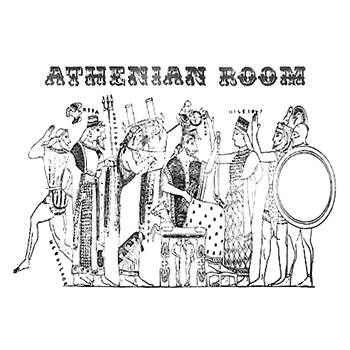
I’m in The Athenian Room, perched at a small table next to the exposed brick wall, underneath a mural of a sunlit blue and white hand-painted Greek fishing village. It’s morning in the mural. But outside the front window at The Athenian Room, it’s a warm summer evening, with people strolling through the soft twilight of Webster Avenue.

Alex, the owner, looks out on the room, nods at me, and accepts a nod in return. I wave away his offered menu. His eyebrows rise, I acknowledge the gesture, and he leans over the front counter to tell the grill man the order is for gyros, fries, and a coke.

Getting hungry, I close my eyes and imagine I’m a fisherman from that mural on the wall. Looking down on The Athenian Room. Remembering just a few of the threads that spooled out and connected this happy place to eat with Chicago’s homegrown cultural force — improvisation for the theater.

In my mind, Tina Fey is about to walk in the door. She will be ordering the Greek chicken.

In the time it takes for her to order and eat a meal, I could barely even begin to make the connections that play out from Improvisation for the Theater. I could just get started on the scenes that would wind their way off midnight stages set only with two chairs, past Second City alumni lists, Saturday Night Live reruns, memories of John Belushi, and Stephen Colbert just last night. Scenes that settle in the corners of everyday lives far from show business. Such a presence, such performances can save people, change them. Getting us to celebrate the connections between people. Prompting us, after a lot of hard work, to join in to what’s at the beating heart of Improv.

The essence of Improv is Truth.

I have been around The Athenian Room since the early years, before there was grey in Alex’s beard. In those years, as the sun rose over the lake and I finished my overnight shift, I would jump off the shuttle bus on Halsted Street, grab a newspaper from a machine, and find — before taking my seat — my coffee poured and Alex making the $1.99 two eggs, toast, and bacon breakfast.

Lost in thoughts of those brighter days, when sunlight poured through the third-floor window of the tiny apartment in the yellow brick building, drinking in Saul Bellow, Mike Royko, and Bill Brashler as if they and all the other Chicago writers all rode in on the morning light.

With my head lost in the books, and my memory entwined with imagination, I might not have even noticed the three people seated at the round table behind me. I didn’t know when they came in, what they looked like, or anything about them until they stop talking.

That’s when I notice the intensity of the silence. Dropping a napkin, I shoot a look. Framed at the table are two young women and a man. Their conversation had been bubbling over with laughter, when all three do something remarkable. They all listen. Listen to each other as if listening was a contact sport. That silence you hear is the echo of someone listening. Listening like it was a thing you could put on the table right next to the Greek fries smothered in the juices of the gyros and flavored with a touch of vinegar.

Listening like no one else listens is the first key to improvisation. Imprinted on my very soul.

I hear one of the women is called Tina. But I can’t really get a sense of who these three are, so I shift my chair. My second glance shows something else at the foundation of improvisation for the theater. There are no stars. Not here. Not now. Learning the craft demands that there be no stars. Because every action depends on someone else. The three fellow diners conversationally bounce off each other like three silver pinballs. But no one is a star.

I look again and swear one of the women notices me noticing. And is giving ‘a look’ back! I put that down to wishful thinking, but I had seen in her eyes a unique kind of intelligent awareness. Intelligence that comes from not being scared.

Now the boundaries of imagination, memory and time are gone. There is only me and the trio at the other table.

Their conversation deepens. I listen harder. I begin to hear names that are rarely, if ever, tossed into the spotlights of Saturday Night Live. I hear the name Neva Boyd. A woman born in 1876. Friend of the pioneers of social service, Julia Lathrop and Jane Addams. Neva Boyd, who figured out that encouraging children to play games with each other made for deeper, richer lives.

Imagine what it would be like to live in a time when people didn’t know that? Oh, maybe they knew it about their own kids. Neighbor’s kids. But not about the children of the immigrant, the children of the vulnerable.

The laughter at the table next to me stops for a moment as the food comes and you hear the gasps of awe. Years from the night I last sat at that table, another author and I would co-write a book on customer service. That book was shelved in favor of another that became a New York Times best seller. Maybe a good business decision? Not so good for me. Good thing I could improvise with what came next.

As I listen to the three at the next table, no one is talking about ‘me.’ You hear the name Viola Spolin, author of Improvisation for the Theater. She took Neva’s work to the next level. Spolin’s son, Paul Sills, pushed it forward. The Compass Players, that University of Chicago troupe which evolved into The Second City, put the work on stage. Tossed across the table in a quiet awe, I hear the name Jo Forsberg. Del Close is mentioned and somebody laughs. Charna Halpern, Linnea and Eric Forsberg, and Tim O’Malley all draw smiles. Now heads around the table are all nodding. The names keep flowing, the circle of community expands and it becomes clear that the third key to improvisation for the theater is the deep history of this cultural force. Chicago’s only real claim to have developed a unique cultural force. First listening, then working without stars, then acknowledging history. A superstructure springboard that spawns and nurtures talent.

Tina Fey, bubbling up with unquestioned inborn talent, has a river of history behind her. She can trace that all the way back to a woman born in 1876.

The sun is starting to go down on Webster Avenue. The people at the next table are finishing their meal. Alex looks over to me with a glance that says, “Hey! I need the table.”

All are back out on streets of a city summer night.

Just a few blocks north on Lincoln Avenue is The Players Workshop. This place is for those not destined for the main stage of Second City on Wells Street. At Players Workshop, you can pay to learn the craft of theater improvisation. And maybe, even if it’s just for a moment, feel the art. Feel some truth. Feel some history.

I step up the pace so I won’t be late for my class. Now arriving and opening the door, I am early. Thirty some years early for a Tim O’Malley Workshop from the future. A future that is happening right this very moment. As if a door through time has opened up for my friends and I to create something out of nothing.

Improv is alive!

Scene.
Posted in heroes, spirit | Comments Off on For Tim O’Malley

Annie Beth Morningstar

She was the baby from the train that fell from the sky.
Did we catch her when she fell? I don’t know.

Maybe you should decide.

There were three of us. You, me, and the child. We named her Annie Beth Morningstar. We couldn’t give her much, but we gave her that name.

And I still wonder, even after all these years, why us?

Why were we the ones who caught the baby who fell from the train that fell from the sky?

The story started in the deepest winter.

First, You

Across the years, I am calling you back to remember that first night. In the smoky dark club overlooking the baseball stadium, winter howled outside the second-floor picture window, and you stood at the bar with a group, drawing the stares of any breathing male.

I was never one to just stare, even if I had to wait in line. I made my way through the crowd and simply stood in front of you. Your eyes narrowed, registering the mystery of that bold move, while I said, “You are so far out of my league, it would be an honor just for you to tell me to get lost.”

Something shifted out of range, those dancing winter winds taking the lead. I saw the smile you thought you were hiding, and with widened eyes you stared hard enough to see my future. You said, “Anybody with a line that cheesy needs work.” Your laugh was like a river running straight from your soul. “How can I tell you to get lost? You obviously need a lot of help.” We both laughed, and like an unspoken promise, everything changed.

The late-night rhythm struck a new beat. We started talking, the crowds thickened, and we slid into a kind of dance. There was a moment when your back was up against a scratchy brick wall, with your arms around my neck, and you said, “I don’t do stuff like this.” That kiss made us both forget our names. That moment erased everyone in that smoky loud room but you and me.

Then, The Accident

A week later came the accident that choked the whole city with pain. The accident and the baby on the train.

They’re called ‘El’ trains, elevated maybe two stories above the street on rusty iron superstructures that break apart every ray of sun brave enough to shine. Circling a loop of downtown Chicago, they rumble through the sky. Any human being in downtown Chicago who has looked up at the El has, at some point in their lives, asked themselves what would happen if one of those screeching steel monsters fell off the track. But no, that could never really happen.

Until it did.

At 5:23 on a rainy gray winter evening, the streets were jammed with rivers of people and vehicles. A motorman on the El paused at just the wrong moment – maybe there was a little bit of something he smoked, maybe not – and one car slammed into the back of another train. Two train cars jackknifed into the air, in slow motion, the wheels peeled from their tracks. Screams, stopped hearts, and terror blanketed souls like sweat. Glass shattered, metal twisted, bodies flew as two cars full of people tumbled over the side of the track and smashed onto the street forty feet below. One car was left hanging, jammed with terrified commuters, dangling in horror. Pointing straight down, maybe ten or twelve feet from the hard, cold street, the train car swung in the winter wind.

Ambulances lined up, engines humming, red lights strobing across the steel supports where the one train car still dangled, hanging from the sky.

Eleven people died hard deaths. The screams of the one hundred and eighty injured filled the night, crushing the heart of the city.

The hospitals ran out of beds, so they started putting people on the psych wards. Had to. No other choice. On the adolescent psych ward where I worked as a counselor, we set up cots in the day room and took in five victims. Five shattered souls who would never forget the terror of their train leaving the track and roaring out into the open air.

With no empty beds, there was no one else to claim the baby, so we took her on the psych ward. Like the first responders at the scene, those of us on the ward had no idea how the baby survived the crash. It was as if this baby could fly.

The Flying Baby

The Head Nurse, Larissa, had seen everything the street had to dish out. This was a woman who knew what the word triage meant … even she was stopped cold by the flying baby.

Since we had no cribs, we pushed two armchairs together in the nurse’s station. Aunt Sally, as we called one of our older nurses, shook her head, looked down on the child, and exclaimed, “Our own lil’ baby Jesus!” To which Larissa replied, “If that’s who this child is, then it turns out that Baby Jesus is a girl, Sally.”

The tiny stranger, looking up at the circle of heads surrounding her, didn’t seem the least bit scared. A little bruised, breathing calmly, she appeared to be eighteen, maybe nineteen months old. All of us had heard the first thing the EMT had said when he wheeled her into our ward. “But I tell you people, I did not know that babies could fly.”

The EMT continued, “She was in one of the cars that flew off the track and bounced off the ground. I found her in a pool of broken glass on the sidewalk. Smiling and gurgling. Not a single cut from all that glass. Barely a bump from the fall. More like she had just woken up from a nap. Nobody around her survived. No one. Just this one little child. As if she could fly. I swear. It was just like she could fly, slide on, and land sweetly gently on the street, waiting calmly for what comes next.”

Annie Beth Morningstar

Later that night, I called you to say I was working a double shift and wouldn’t be home until morning. I told you the story of the baby, and you asked me her name. I said no one knew, and that’s when you came up with Annie Beth Morningstar. You didn’t think about it. You said it right away. As if there was no other choice. You gave her that name. So that’s who she became.
The next morning, we had breakfast at Nookie’s. Over the eggs and sausage and coffee, we decided that you would come with me at the start of my afternoon. shift, and visit little Annie.
Later that morning, we walked back to your place for love and the only rest we could find.
When you came with me to my shift later that afternoon, we found that little Annie had been moved to the Prentice Women’s hospital on the other side of the building. You got to see her, though. I’ll never forget your face when you first saw her; you looked ready to sit down and start making plans with her.

It took almost two weeks to find the parents. They had both been seriously injured, the father was in a coma, and the mother had suffered a head injury, causing some memory loss. For those weeks, no one came forward to gather up and hold onto that little baby miracle, so, we would see her. We would see Annie every day. The nurses always let us in so we’d sit with her, sing to her, rock her to sleep. Sometimes she’d smile and look at us as if we all shared a secret. Catching her with smiles as she drifted off to sleep.

For a while she was just ours.

Up until that day her parents arrived.

I remember handing Annie Beth over to a woman I must suppose was her mother. Annie’s eyes were troubled. She gurgled and cried as she flailed, found your finger, and held on tight. She squeezed your finger, beaming you a smile, a smile that would have to do. Beyond her, the hospital room door opened, as if a train were about to board for a trip to some other distant sky.

After Annie

How do you lose something that was never really yours?

That winter, Annie’s winter, sputtered into a lifeless spring. Every corner of Chicago was painted its own shade of grey.

One grey spring morning, soon after losing Annie, we woke up at the exact same time, looked at each other, and both said, “Road Trip.”

How easy it was, back then, to just jump out of bed, slide into the car or hop over to the airport, and just get out of town. Packing was a 90-second prospect. No vitamins, medicines, lotions or potions, no preparation for weather changes. No reservations or planning the route. It was just “Go!” And if we got lost, we would just drive until we weren’t lost anymore.

Maybe our road trip was a buried cry to losing Annie. Or maybe not. We weren’t all that deep-thinking then. If some great cosmic voice from the sky spoke to us, “Do you realize this will be your last trip together?” we probably would have just turned to each other and asked, “Did you hear something?” pause a beat to laugh, and then say in unison, “Nah.”

Somehow, we knew we were driving south. How we got to North Carolina is a mystery, but we arrived at the Outer Banks. Camping amid the salty smells and sounds of the ocean, we drifted off to sleep. That’s when the rain started. Before long, it got seriously torrential to the point of scary. The tent collapsed, and we gathered up everything. Tripping and slipping and giggling in the in the mud, soaked to the skin, we ran for the car, tossed our stuff into the back seat, and started driving through the wet Carolina night. With only the rain and the empty, middle-of-the-night road, we headed for your parents’ roof three hours away, or maybe not.

For a while, we were quiet, listening to the rhythm of the wipers, and breathing in scents of the green forest rain. Turning away from me, your eyes searched among the darkness of the pine trees. Turning back to me, your eyes wide and bright as starlight after rain, you said, “Think she’ll remember us?”

I looked at you and said, “She will.”

And you answered, “We can hope.”


The original story was posted in March 2022 as The Baby From the Train. This edited version is what made it into my book,  Chicago Street Corner Stories, published in late 2021. Both versions have their merits. If you read both, let me know your thoughts, thanks.


Posted in healing | Comments Off on Annie Beth Morningstar

The Night Ernie Banks Died

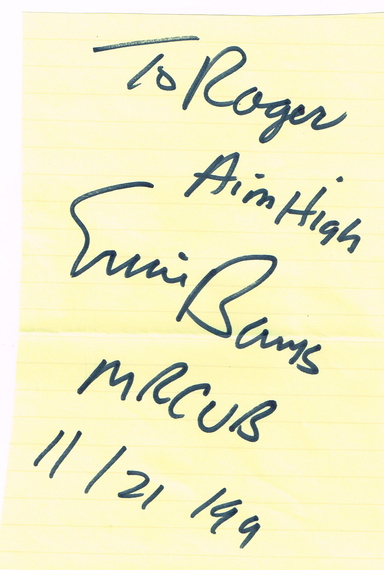
Ernie Banks died tonight. And in the summer green fields of heaven, they are playing baseball. Later on, I’ll go listen to Steve Goodman sing “A Dying Cub Fan’s Last Request.” But not right now.
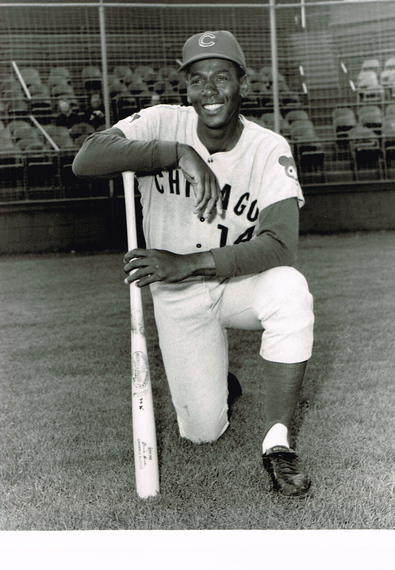
Tonight I hear the crack of the bat and the rumbling roar of the crowd in the sunshine. Mr. Cub has just hit his 500th home run and when you watch him lope around the bases, head down grace in motion, you’ll run those bases with him and it will be a trip that will last your whole life through.

There be a news conference. There will be tributes. Tributes galore. But not right now.

Right now there is a still, grey pallor that hangs over the city on this cold winter night. It’s like the opposite of baseball. The night Ernie Banks died.

Six blocks east, Wrigley Field lies in tatters. A renovation that won’t be done in time for the start of the season. A construction site that hurt my heart when I first saw it. Place looks like someone took a giant cleat and stomped it into bits of broken toy.

So Ernie’s gone to greener fields to finish out his double header.

Here, we’ll still be expecting him on TV for just one more interview. I remember not too long ago he had an idea about ending hunger. That was Ernie. He made no small plans.

Here in this big shoulder city, as the years go on, if you look real hard when you’re walking down a street or a path through a park, and if you catch a glimpse of a smile like summer, or if you hear somebody talking happy, or if you see a gleam in someone’s eye like a warm day in June with the sun sprinkled soul of a giant; if you see any of that, you’ll be seeing Ernie Banks.

The best of us. That smile. Everybody now, “Let’s Play Two!”

Here’s to Ernie. God bless him. Playing baseball in the sunshine.

“Let’s Play Two.”


Published January 26, 2015 in HuffPost

Posted in heroes | Comments Off on The Night Ernie Banks Died

At the Prophet’s Bar

One night only. Roy Orbison. Written in swooping red neon script on the tired marquee in front of the last roadhouse, where now stands an Outlet Mall on Highway 94 between Chicago and Milwaukee.

It was a Wednesday night. Bitter wild December wind cold. Long, long ago. Back when I did things like stopping to listen without a second thought.

Easing down on the exit ramp and coasting by “The Brat Stop,” a jarring restaurant lounge screaming TOURIST! And instead parking in front of “Bobby Nelson’s,” the quiet red brick cheese and sausage heaven that would provide tonight’s dinner. Buying way too much. Because a pound of this and a pound of that, wrapped tight in butcher paper and torn open as soon as I got back in the car does add up.

Circling back under Highway 94, to the almost empty lot in front of the Roadhouse. The neon flashing like a heart beat. Roy Orbison.

Inside to the welcoming warm darkness, an almost empty room, except for there she was, at the end of the bar, by herself. Eating a chocolate chip cookie. She looked up, smiled, and time stopped.

“What are . . .” I started.

“Of all the gin joints in all the world,” she laughed and winter suddenly was a memory. This was a woman who wasn’t afraid to tuck herself alone in to the corner of a dark bar on a Wednesday night. If there was a good reason to be there.

“I’m flying home out of Milwaukee. Late flight” she said. And you didn’t think I’d spend any more time in Beloit!”

“Hey, there are worse fates. So how do you know this place? Or did you just see the sign?”

“Oh this is the Prophet’s Bar.”

“The what?”

“You gotta get your nose out of the books and pay attention young man! The Prophet! I heard about him back at school from a guy who comes from Kenosha. They call this guy ‘The Prophet.’ Nice old guy. Doesn’t hurt anybody. See him sitting by himself over there with the Old Style draft?” She pointed at an older man I hadn’t noticed having only been drawn to the light of her smile.

“Yeah, he’ll just come over, say something, nod his head politely and leave. He gives these little speeches. He’ll do it before the music starts. Won’t interrupt anything. People around here, the bartender was just telling me, they all expect it. Nod their heads. Say ‘Thank you Timothy’ and he goes on to someone else or back to his beer.

‘Timothy?’

“Yeah, I’m sure he’ll come see us.”

It was an hour to the show. And we spent most of it in that warm corner finishing each other’s sentences.

Sometimes, and if you’re one of the fortunate ones you’ll have this happen to you, you simply connect with another human being. A world without them isn’t a thought you could ever have. Instead there is a history. That slow, steady drum beat waltz leading up to that connection. Then there is right now. A right now so overwhelmingly good that it makes your soul breathe. And finally there is a future. The natural as a summer rain future of the two of you together in some small corner of a green Jersey forest, or a warm wind Carolina mountaintop, or some secluded sun drenched beach along the Gulf Coast. Anywhere. Because there will be a future. Full of work that you will both do in the rhythm of some larger song you can both almost hear.

As the time for Roy Orbison to play came close, I looked down and discovered we were holding hands and I could not remember when we started. We had always held hands. Always would.

As Timothy the Prophet approached, she saw him first.

He cleared his throat. Looked at us both. Blue eyes of kindness and he spoke.

“Don’t be naive. There are difficult times ahead. As the end approaches, people are going to be self-absorbed, money-hungry, self-promoting, stuck-up, profane, contemptuous of parents, crude, coarse, dog-eat-dog, unbending, slanderers, impulsively wild, savage, cynical, treacherous, ruthless, bloated windbags, addicted to lust, and allergic to God. They’ll make a show of religion, but behind the scenes they’re animals. Stay clear of these people.”

When he finished we were all three quiet for a moment. His words settling in to some silent corner of our connected hearts. Devastating words of warning as a prelude to a love song.

Roy Orbison came on alone. Just him. No strings, back up singers or any of that.

Just that voice. Just Roy Orbinson’s voice

He sang “In Dreams.” And we held hands. Like a world without end . . . . .

And tonight. As I shut down the circuit breakers in my janitor’s closet in the outlet mall, reminded myself to stop on my way home to pick up a six pack, wondered what I’d be watching on television tonight; I remembered Timothy’s warning for the first time in years.

I held on tight to the sound of Roy Orbison’s voice.

And I wondered where she’d gone.

Posted in love stories, spirit, Uncategorized | Comments Off on At the Prophet’s Bar

Young Carole King

She’s somewhere in her twenties. Traipsing downtown from Brooklyn to the Brill Building in Manhattan where she plunks out tunes on a battered old piano, some kid calling himself Neil Diamond in the room next door, little Carol Joan Klein from the neighborhood thinking she can be some sort of songwriter or something. What’s with the Carole King name? She is little Carol Klein. She’s working as a secretary. Husband Gerry is in pharmacy school. Here is this Carole King person writing a melody, leaving the music on the piano at home with a note to Gerry scrawled “See if you can come up with some lyrics for this one.” Gerry listens, then sits down to write:

“Tonight you’re mine completely

 You give your love so sweetly.

 Tonight, the light, of love is in your eyes.

 But will you love me tomorrow?”

 Then the song actually gets sold to the Shirelles. There is actual money from the song writing now. There is a limousine ride when news of that sale comes through. The young couple hops inside that car and never looks back. She is Carole King now.

But she’s not eighty two. Because I’m still 21, right?  I’ve just come down from Wisconsin to live in Chicago. There were five of us renting the 2ndand 3rdfloor of the old building at Racine and Webster. I had a job. I was a teacher. Special Ed kids. They would make you crazy if you weren’t careful. Which is why it was good that we had rights to the roof of that building. Because sometimes in the summer, she and I would grab the sleeping bag and climb up through the glowing summer prayer of star lit city night. She and I, we’d go up on the roof. Dancing in the summer wind beneath the stars. Owning the world. Everything being possible.

We’d go “up on the roof.”

Like Carole King.

Posted in love stories, music, Uncategorized | Comments Off on Young Carole King

Resurrection Chicken Soup

11715340
Does the golden promise smell of chicken soup wafting up from the street to your third floor landing still linger through the years?

Can that hand delivered memory smell still come streaming back now that your old place on Second Avenue in Manhattan has been blown to kingdom come? Can the smell of chicken soup come back?

I read about that gas explosion last month and saw it was your old address. Made the national news. These days I work for a gas company. So I pay attention. I could tell you the details of exactly what happens when somebody tries to siphon off stolen gas. Let’s just say that chances are, it will not end well. This horror scene on Second Avenue, leveled what, three buildings? Pounded them into dust.

One of those buildings was where you lived. That place where we would write three-word great literature in the frost on the windowpanes. Where three stories up, the radiators would clank and sizzle through the winter and the traffic would rumble and roar outside while a puffy red comforter would wrap us up in all the warmth the world had ever known as we lay still and so alive, after love.

So all these years later, I read the news story of the gas explosion on the 21st floor of an office building in Chicago and once again I could smell the chicken soup. Across all the decades. The mist of broth and time from the Second Avenue Deli. Like some unseen hand, tugging at my sleeve and steering me to stand once more before Max’s holy silver alter steam table. Max, bushy gray moustache and white apron, points at the chicken soup tureen, shrugs his shoulders, says “Oy. For the girl again? Again for the girl?” I nod and look down.

I would take the soup and crackers in the brown paper bag, trudge on up to the third floor landing. Then on a dusty table under a perpetually burned out light bulb, I would leave my little offering.

Which I am sure drove you bat shit crazy. At least for awhile. What a pest I was!

I was trouble. I was not a future. I even had another girlfriend. So why in the name anything that matters should you spend even a second more with me? I was in marketing. What did that even mean! You worked for the same publisher. This is back when there was more than one publisher. Way before amazon dot come changed everything. In the East Village neighborhood joints after work, when people would ask you what you did, you’d say things like, “I scrub editorial toilets.” No one knew what that meant either but it was a much better answer than “I’m in marketing.”

What split us up? I guess there was little stuff. Most of it I don’t remember. We ran with the same crowd. Would be writers. Editors. Aspiring famous people. All of us in and out of each other’s lives. Often so much so that when someone hurt someone else, the story rippled out like a stone tossed in the pond leaving only circles on the water and a stone gone for keeps without even time to say “I’m sorry.” Or maybe “can we try this one more time?”

And that’s what prompted me to start in with the soup.

I had a place around the corner, like the guy in that song you didn’t like but I loved, would sing, “really no place at all, just a hole in the wall.” It was our first spring apart. Just before Easter, which overlapped with Passover that year. So the soup thing was kind of a interreligious meaningless gesture. Resurrection Chicken Soup.

You had come down with a horrible case of mononucleosis. Everybody was talking about how you literally couldn’t move. And there was nothing I could do about it.

Drove me fucking crazy. You got sick. I got crazy.

I knew you’d be fine. I knew the stories you sent spinning out our Second Avenue pond would be extra sharp. Extra funny. But there was nothing I could do to ease your troubles.

So I started leaving the soup. No words. Just the soup.

As you got better, you eventually lost the job scrubbing editorial toilets, but every time I heard news of you, I’d leave the soup. Every time something big would happen in your life, I’d bring the soup. I told Max I was sure I’d be bringing soup to your wedding.

You never mentioned it to anyone, I’m sure. Love is not the opposite of hate. Love is the opposite of indifference. I assumed your indifference. Probably a good thing that we never made it too many steps outside that that puffy red comforter, keeping us warm in the New York City winters. All that indifference can get old.

Of course you finally left the big city and so did I. One of us off to warmer winds and the other off to even colder winter winds. The night before you were set to leave town, I left my last brown paper bag on your third floor landing.

And down through the years I’d hear bits and snatches of stories of your adventures in the world of what happens when none of us are young anymore. So I’d dream up another serving of that soup for you. A ladle full of hope that your spirit was still shining.

Right on up to that big explosion, a couple weeks ago, that leveled your old place on Second Avenue. The explosion that brought back the smell of that chicken soup.

That soup I once again placed, like a story,or a birthday present, right outside your door.

Posted in love stories | Leave a comment

Plenty of Time

It was back when we all had plenty of time.

A late night call. I was up. Scribbling something unmemorable in a spiral notebook under the circular pool of light cast by a metal gooseneck lamp.

The caller ID said Los Angeles. I remembered the number. Even after two years of never seeing it at all. So I picked up the phone. And then as if the conversation had never stopped, you said, “So come to Denver tomorrow.”

“Peachface?”

Your laugh. Like a bubbling fountain lit with the colors of a soul born wise. “So I’m still just fruit to you, huh?”

“Fruit, famous bimbo, circus clown . . . “ I heard background noise, a piano, cranked up a notch. Somebody was singing something. There was a crowd. “Where are you, Melon?”

“I’m at Warren Zevon’s house.”

“What’s he like?”

“Intense.”

“I’ll bet. So, I gotta tell you. This is a surprise. How’s work going?”

“I got another TV series.”

“That’s wonderful! Congratulations!” She filled me in on the production deal. The premise. The characters.

“That is really great.”

And then she said it again. “Come to Denver.”

“When?”

“Now.”

“Listen Lemon-Lime, I can’t just go flying off to Denver! I gotta work. Tomorrow there’s a meeting on the IPO and I ..”

“Oh yeah. I forgot. You’re like Mr. Software Executive, can I get you some coffee sir, oh of course I’ll sit down and sir, why are you touching me there . . . . .”

“Yeah that’s a normal day.”

“Do you like it?”

“It’s okay. We’re going public soon and I’m cashing out. So there will be a little bit of money if a rainy day ever comes. A rainy month, not so much. But a few good days.”

“Okay, then you really gotta come to Denver.”

“ Kiwi, it’s been two years since that one weekend in Chicago. And you really want me to come to Denver. Why Denver?’

“Cause there’s this cabin. We travel north. Way north. Belongs to a friend of a friend. I’m gonna start work on the new series soon. So I thought. . . .okay, I know I didn’t return a call or two, but then I remembered how weirdly normal you are. . . .and if we went out cross country skiing and met a bear? I’d need somebody there who could out-talk the bear.”

Denver was a regular stop in my travels for work. I knew the flights. While we talked, I reached for a book people used to have that listed airline flights.

“So you really want me to come to Denver? Then off to someplace ah. . .north? You’d risk a whole, TV and movie star seen with a nobody thing?”

“Roger, are you gonna go all ‘star is born’ on my ass? Walk into Lake Michigan and take the big drink” Force me into playing Barbara Streisand? You know I don’t want to be Barbara Streisand.”

“I know. You want to be Lucy. I remember. So you’re sure you want me to come?”

“Why are you asking me that question? You’re still a guy, right? That same batshit crazy cocktail of macho and sensitive I remember? That time in the Four Seasons in Chicago? You remember I was the loud one? And how much more fun showers were when you had company? You are still a guy, right?”

I answered, “6:00 arrival. Denver International. United Flight 545. Tomorrow night.”

And I hung up the phone.

This was back when we all had plenty of time. Everything seemed so easy. And no one knew it wouldn’t always be that way.

Barreling down the runway the next afternoon, strapped in wheels up. A straight shot through the sky to Denver amazed at how easy it was to just go. The one thing I always did was make sure to have people who could be in charge around me at work. So now they were. Back then there was no Black Berry, on or off the grid, 24×7.

So the world faded as the plane climbed, and the songs in my head started up.

The Isely Brothers. “If you leave me a hundred times. A hundred times I’ll take you back.”

Then, landing in the snowstorm, so the music stopped for a moment. She was in the corner of the gate by herself. Not looking like a movie star; just looking bright-eyed happy. One open palm wave. Then a slow motion walk, holding back a magnetic pull. She sticks out her hand as if to shake and then busts loose; jumping up to wrap her legs around my waist and the only word I remember after that was “Hi.”

The car was in her name. I remember the look on the rental car guys face when he handed me the keys. A look that said, “Damn I wish I was you.”

Then out to the starry Rocky Mountain night. “As soon as you got here it stopped snowing,” she said. She put the mix tape she had made into the slot as we began the winding road north up thru the pine trees, and Bob Dylan sang as we talked. We missed not a beat of the silent two years. Everything was easy when we talked. Dylan sang

“If where the snowflakes storm, when the rivers freeze and summer ends” …and the pines sang a private melody all our own.

Her Dad had been a DJ, and she had been making mix tapes since she was five years old. Driving up further into the mountains, it was as if her music let us own the road. Lowell George sang

“All, all that you dream, comes through shining, silver lining”

As we glided up into that starlit night, the song flowed into Frank Sinatra singing

“You are the promised kiss of springtime, that makes the lonely winter seem long.”

Then Bonnie Raitt…

“You made me leave my happy home, you took my love and now you’re gone”

And just for one instant, looking at a giant boulder that had tumbled down the side of the mountain and feeling the rush of the Big Thompson stream cascading in the darkness to the side of the highway, just for one second, I could see a time when it wouldn’t always be this easy. But that faded fast, as Nick Lowe and Dave Edmunds bopped along, asking
“Heart, why are you pounding like a hammer? 
Heart, why are you beating like a drum?

We talked some more about the premise of her show. How much she was going to able to be herself. A lot more than last time. But not as much as the next time. Back when we all had plenty of time, the conversation always stopped at any talk of future.

On into the mountains and the northern night. The talk and the music so easy, the rhythm we had together was so warm, that she fell asleep, leaving me with directions to the cabin. We pulled in at the dawn, having been up all night. A private little jewel of luxury nestled in a circle of pine trees. Not a neighbor in site. Five miles from the nearest town. A view past the circle of pines out across the tops of the mountains, the golden light of coming day rising with the sun.

“Wake up little TV girl,” I leaned over and kissed her forehead. “We’re here.”

As her eyes opened to the first light of the sun, the knowing wisdom in the old Kris Kristofferson song ended her mix,

“I have seen the morning
Burning golden on the mountains in the skies.
Aching’ with the feelin’
Of the freedom of an eagle when she flies.
I don’t know the answer to the easy way
She opened every door in my mind.
But dreamin’ was as easy as believin’
It was never gonna end.
And lovin her was easier than anything I’ll ever do again.”

Back when we all had plenty of time.

—————–


Posted in Uncategorized | Comments Off on Plenty of Time

The Baby From the Train

The baby from the train that fell from the sky.

The story swirls and entwines with the paths of our three stars. You, me and the child, Annie Beth Morningstar. We couldn’t give her much, but we gave her that name.

Didn’t it all happen sometime around New Year’s?

First, you.

Calling you back across the years to remember the night with me. Winter was howling outside the second floor picture window of the smoky dark club looking out on the baseball stadium. You stood at the bar with a group, drawing the stares of any breathing male.

I was never one to just stare. Even if I had to wait in line. So I simply stood in front of you, saw your eyes register some kind of mystery, and I said, “You are so far out of my league, it would be an honor just for you to tell me to get lost.”

Something faraway shifted the dancing of the winter winds, I saw the smile you thought was hiding in your eyes and then you stared hard enough to see my future. “Anybody with a line that cheesy needs work.” Your laugh was like a river running straight from your soul. “How can I tell you to get lost? You obviously need a lot of help.” We both laughed then, an unspoken promise made.

The rhythm of a late night shifted. We started talking, the crowds thickened, we slid into some kind of dancing. Then your back up against the scratchy exposed brick wall, you looked up, your arms around my neck, “I don’t do stuff like this,” you said. A kiss that made us both forget our names. Then there was no one in that smoky loud room but you and I.

A week later came the accident that choked the whole city with pain. The accident and the baby on the train, Annie Beth Morningstar.

They’re called “El” trains, elevated maybe two stories above the street. Built on a rusty iron superstructure that separated every ray of sun brave enough to shine. They circle the loop of downtown Chicago, rumbling through the sky. Any human being in downtown Chicago looking up at the trains has asked themselves at some point: what if one of those screeching steel monsters were to fall off the track?. . . but no. That could never really happen.

Until it did.

At 5:23 on a rainy gray winter evening, the streets jammed with rivers of people and vehicles, a motorman paused at just the wrong moment – maybe there was a little bit of something he smoked, maybe not – and one car slammed into the back of another train. Two train cars jackknifed in slow motion into the air, wheels leaving tracks. Screams, stopped hearts and terror blanketed souls like sweat as glass shattered, two cars full of people tumbled over the side of the track and smashed on the street forty feet below. Another car, also jammed with terrified commuters, was left hanging.

Dangling horror. The train car pointed down, maybe ten or twelve feet from the hard, cold street, swinging in the winter wind.

Eleven people died hard deaths. The screams of the one hundred and eighty injured filled the night, crushing the heart of the city.

The ambulances started lining up, engines humming, red lights whirring against the steel supports where the one train car still dangled, as if hanging from the sky.

The hospitals ran out of beds, so they started putting people on the psych wards. Had to. No other choice. On the adolescent psych ward where I worked as a counselor, we set up cots in the day room and took five people.

We also took the baby. Larissa the head nurse, having seen everything the street had to dish out, a woman who knew what the word triage meant…even she was stopped by the site of the baby.

We pushed two armchairs together in the nurse’s lounge. There were no cribs. Another one of the old nurses, we called her Aunt Sally, shook her head and said our own Lil Baby Jesus. To which Larissa replied then Baby Jesus is a girl, Sally.

The tiny stranger didn’t seem the least bit scared. Bruised, cut, battered but breathing. Eighteen. Maybe nineteen months, Larissa said. But I tell you people, I did not know that babies could fly. EMT says that she was in one of the cars that bounced off the ground. Nobody made it around her. No one. Just this one little child. As if she could fly.

Later that night, I remember calling you to say I was working a double shift and wouldn’t be home until morning, and telling you the story. You asked me her name, and I said no one knew. That’s when you came up with “Annie Beth Morningstar.” So that’s who she became.

The next morning we had breakfast at Nookie’s. Over the eggs and sausage and coffee, we decided that you’d come visit little Annie with me.

I remember that morning, walking back to your place after breakfast, for love and the only rest we could find.

Late that afternoon, you went in to work with me. Little Annie had been moved to the Prentice Women’s hospital on the other side of the building. But you got to see her. I’ll never forget your face when you first saw her; you looked ready to sit down and start making plans with her.

It took almost a week to find the parents. So we’d go see her every day. The nurses always let us in so we’d sit with her, sing to her, rock her to sleep. Sometimes she’d smile and look at us as if we shared a secret.

For awhile she was just ours.

Then, after Annie, we took a road trip together. Just about the time that we both decided our paths would be charted separately, in different directions after all. But there was our one last trip.

We were on the Outer Banks, camping amid the salty smells and sounds of the ocean, as we drifted off to sleep.

Until it started to rain – I mean rain. The tent collapsed, and we gathered up everything. Soaked to the skin, we ran for the car and started driving through the green forest Carolina night. Bound for your parents’ roof three hours away, singing Beatles’ songs at the top of our lungs. We talked a lot about Annie and you told me something you told me our very first night together, when people tell each other the big things, to see if the little things will work.

Laying there on our backs, both of us spent and sweaty, breathing hard, smiling at the world, you said hey, so you’ll never have a kid. So I don’t have to worry about birth control. Besides, life should hold some mystery. And if you knew the reason for everything there wouldn’t be any mystery!

If you knew the reason for everything, there wouldn’t be any mystery. Like the mysterious survival of Annie Beth Morningstar.

Then, for our three stars, we sang one more Beatles song in the Carolina rain.

One more song for the baby for the baby from the train that fell from the sky.


This story was posted in March 2022. An edited version, Annie Beth Morningstar, made it into my book,  Chicago Street Corner Stories, published in late 2021. Both versions have their merits. If you read both, let me know your thoughts, thanks.


Posted in Uncategorized | Comments Off on The Baby From the Train

Derek and the Virus

Derek lost his room around the time the virus started seeping into Chicago. Now Derek stays on the street full time. Two squares of concrete in front of the crystal shop on Michigan Avenue. A street that used to be called “the magnificent mile.”

Derek doesn’t call it anything since the stroke robbed him of speech. Now he just exclaims with bursts of sound. A thumbs up roar of delight when you greet him. When he knows he’s been seen.  The woman who owns the crystal shop walks to his concrete square and has a 20 questions dialogue asking what happened to his room? Does he have a place to sleep? He answers with one sound for “yes” and a shorter, clipped sound for “no.” She asks if a shelter would work. Panic spreads across his face. The fear of what happens in those shelters barking out in a very clear “No!” And as the late afternoon crowds thin, the trains half full of people holding in coughs and stifling sneezes, the lady in the Crystal store makes phone calls trying to find a roof for Derek.

While I am walking past the building where someone tested positive. It’s next to the building where I work. I’m thinking about people who –from the very real, stomach gnawing need for money—keep working. People who have to make the horrific choice of working or staying safe.

My Dad comes to mind. I catch a glimpse of a profile cast by someone on the street. A walk. A laugh. A look in the eyes. Just like him. Gone these past few years, he comes back to look after all of us. When things get really hard, he comes back. Now it’s night. Derek is out there. The rain comes. My Dad is here.

He comes back for all of us.

Posted in Uncategorized | Comments Off on Derek and the Virus

My Corona

When I hear “don’t be scared of the Corona virus,” it calls to mind my sister Wendy and I, sitting in the dark when we were around eight and ten, watching the movie Whatever Happened to Baby Jane. We were terrified. And now years later, I have no idea why. Or even what the movie was about. I Just remember we were scared. But if somebody, back then, were to say, “Don’t be scared” that would not have helped. It would not have helped then. Doesn’t help me now. 

Yesterday morning Maria and I are in the library checking books out that she needs for her teaching job. The woman behind the counter is wearing surgical gloves as she coughs into her hand and blows her nose and hands us each book one by one. All while wearing the gloves. Should I be scared? Or even think about the very nice, well intentioned lady who didn’t get the purpose of the gloves? Telling me “don’t be scared” doesn’t help. So, what does help? What’s have I learned so far? What’s the story here? First is the message that we are all in this together. The virus is on every continent but Antarctica. It isn’t stopped by a wall or a travel ban. Second, Facts matter. Even when we factually don’t know much at all. So far, 3 people have been identified as infected in greater Chicago. 2 of the 3 have recovered. Third, credible leadership matters. It’s nice that we only have 3 people identified in Chicago. But put that in context. We also haven’t tested more than a tiny fraction of the population. Unlike South Korea and their drive to test what looks like everyone. Credible leadership means—like my friend Andy Schulkind wrote—not getting stuck in fear. It means planning. It means paying attention to experts. Trusting the scientists. What’s the vision, the unifying picture of hope that all of us citizen leaders can use to take us though all the unknown’s ahead? Perhaps it’s the “Stockdale Paradox.” The ability to hold two seemingly contradictory beliefs at once. What are those two beliefs? First, that we all have a common problem here. And second, that we will find our way to a common solution. We will find our way. Hope remains.

Posted in Uncategorized | Comments Off on My Corona